

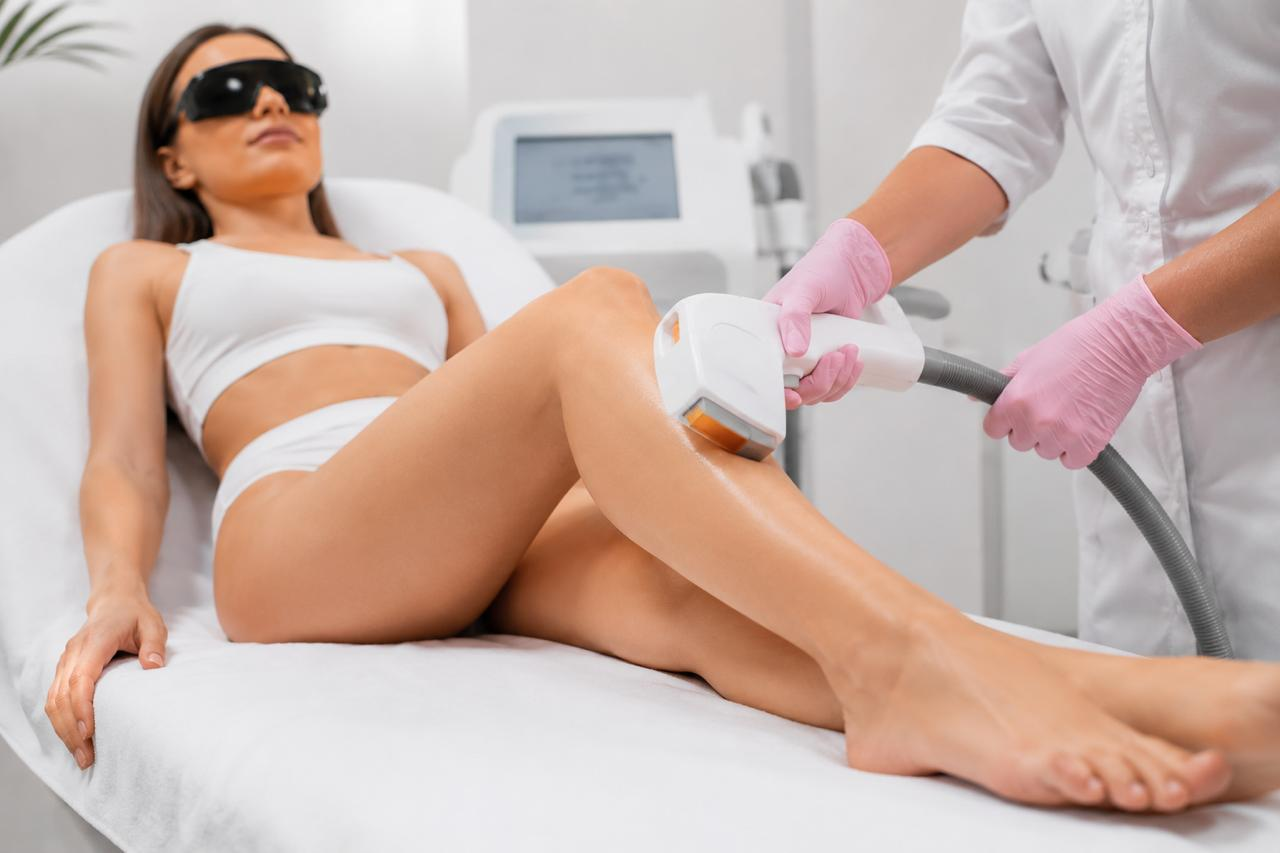
For many years, the ritual of body and facial hair removal has been an ongoing struggle for men and women around the world. The most common methods, such as shaving, waxing, sugaring, and depilatory creams, only provide a temporary solution and are often followed by unpleasant side effects. Razor burn, ingrown hairs, and folliculitis are some of the frequent complications of regular hair plucking, which makes people turn to innovations in aesthetic technology. Laser hair removal has come a long way and now provides a relatively comfortable alternative to traditional methods. Understanding the science behind laser technology will help discern the most beneficial solutions for individual needs.
Laser Hair Removal: The Biology of Follicle Destruction
To begin with, laser hair removal technology is built upon the fundamental understanding of the hair growth cycle. First of all, it is important to note that hair rarely grows on the body continuously. Instead, each strand goes through three cyclical phases of development. These are the Anagen (growth period), Catagen (transition period), and Telogen (resting period). When considering any form of hair destruction, it is important to understand that the effectiveness of each procedure depends on the client’s natural biology. Due to the nature of the Anagen phase, hair strands that are actively growing have the highest concentration of melanin – the pigment that laser light targets.
Most laser systems utilize the principle of Selective Photothermolysis which allows the beam of light to penetrate the top layers of the epidermis and absorb in the melanin of the hair shaft. Once the laser energy converts to heat, it proceeds down the hair follicle and destroys its growth point – the papilla. The key advantage of this method lies in its ability to target only the melanin pigment without damaging the delicate skin. Due to this fact, laser hair removal is only effective during the Anagen phase.
It is crucial to note that since only actively growing hairs can be targeted, multiple sessions are required to address all strands – each session will effectively destroy a percentage of the hair follicles in the Anagen phase.
Modern Aesthetic Technology: The Breakthrough Wavelengths
Historically, laser devices only featured a single wavelength in their operational spectrum, which could have its limitations. Each wavelength had its advantages and disadvantages; for example, some were more effective on light skin with dark hairs, while others could cause complications on darker skin tones. The breakthrough in modern technology consists in the use of the three laser wavelengths in one applicator – thus, creating a Trio Clustered Diode Technology that effectively targets hair follicles on all skin tones and addresses various levels of penetration:
Alexandrite 755nm Wavelength
This wavelength is great for the widest range of hair types, as it provides the deepest penetration of light while also having excellent absorption rates of melanin. It works well for fine and light hairs that are commonly found on the face and can be used to treat sensitive areas.
Speed 810nm Wavelength
As one of the most popular wavelengths for laser hair removal, Speed provides a fairly deep penetration rate and a consistently high average power. It allows for fast treatment of larger areas, such as the legs, back, and arms.
Nd:YAG 1064nm Wavelength
The absorption of melanin is much lower for this wavelength which makes it safe for darker skin tones (Fitzpatrick’s VI). It also penetrates the skin the deepest which is advantageous for hairs with coarse texture.
Advanced Hair Removal: The Benefits of Lasers
Compared to traditional waxing, laser hair removal – particularly modern diode systems – has plenty of benefits that can make the treatment of choice for most people:
Pain-Free and Comfortable
Laser technology allows for a comparatively painless procedure due to the continuous movement of the laser head and a built-in cooling system. Unlike traditional lasers that used a pulsed mode, modern devices do not hurt and even feel comfortable due to the cool temperature of the tip.
Safe for All Skin Types
Modern lasers utilize a multi-mode approach that is safe for use on all skin tones and types.
Eliminates Ingrown Hairs and Bumps
Since laser technology completely destroys the hair follicles, it prevents not only the regrowth of unwanted hairs but also issues associated with them, such as bumps or irritation.
For those who desire to invest in an industry-leading hair reduction without the hassle of regular maintenance, laser hair removal in London will take care of all personal needs and wants.
Step-by-Step Description of a Laser Procedure
A typical step-by-step procedure has the following structure:
Step 1: Laser Consultant and Patch Test
To choose the best settings for the individual case, an experienced aesthetic doctor performs a patch test to determine the skin type, and analyze medical history.
Step 2: Skin Preparation and Shaving
The skin is prepared for the procedure by shaving the target area.
Step 3: Laser Hair Removal Treatment
Using a laser applicator, the doctor gently moves along the treatment area to deliver light energy. The continuous rolling motion ensures comfort and helps the skin reach the desired temperature.
Step 4: Post-Treatment Care and Moisturizing
Moisturizing creams and soothing lotions are applied to the affected area to reduce any possible side effects.
Step 5: Aftermath and Hair Density Reduction
During the following weeks, the body will shed the destroyed hairs and gradually reduce density on the targeted area.
Hair Removal: The Essential Pre and Post-Care Guidelines
It is crucial to follow hair removal guidelines before and after the procedure to ensure optimal results and prevent complications.
Prior to the session:
- It is advisable to shave the target area 8 to 12 hours before the session.
- Avoid waxing or any other hair removal methods for at least a month before the session to allow the follicles to be fully developed.
- Do not expose the skin to UV radiation or tanning beds.
After the session:
- Apply sunscreen to protect your skin from UV light.
- Avoid hot tubs, baths, and strenuous activities for 48 hours after the session.
- Gentle exfoliation 4-5 days after the procedure can help remove dead hair strands and promote a smooth appearance.
When selecting a trusted and reliable hair removal expert, it is reasonable to turn to established facilities, such as a Beauty Salon that offers a wide range of body treatments, hair care, and nail shaping procedures.
Final Words: A Permanent Hair Reduction Guide
Laser hair removal technology has developed significantly in recent years and now offers a convenient and reliable way to address excessive body and facial hair. By utilizing the latest advancements in diode technology and wavelengths, laser hair removal now provides a permanent alternative to traditional methods. Moreover, it is generally safer, more comfortable, and less painful. Taking care of the skin by using the newest generation lasers can be beneficial in the long run.
